Buy café.be ?
We are moving the project
café.be .
Are you interested in purchasing the domain
café.be ?
domain@kv-gmbh.de · 0541-91531010
Buy café.be ?
How are Latin subjunctive subordinate clauses still translated with the subjunctive?
Latin subjunctive subordinate clauses are still translated with the subjunctive in English to convey the same sense of uncertainty, possibility, or doubt. In English, the subjunctive mood is used to express hypothetical or unreal situations, wishes, recommendations, or demands. Therefore, when translating Latin subjunctive subordinate clauses, the English subjunctive is used to maintain the same mood and meaning of the original Latin sentence. **
Perhaps, subjunctive or indicative?
The choice between subjunctive or indicative depends on the context of the sentence. The subjunctive mood is used to express hypothetical or uncertain situations, wishes, recommendations, or doubts. On the other hand, the indicative mood is used for statements of fact or certainty. Therefore, if the sentence is expressing a possibility, doubt, or desire, the subjunctive mood would be more appropriate. **


Similar search terms for Subjunctive
Top-Angebote
Products related to Subjunctive:
-
Areon Ken Coffee désodorisant voiture 30 gAreon Ken Coffee, 30 g, Diffuseurs de parfum avec recharge Parfum d'ambiance, Le désodorisant voiture Areon Ken Coffee transformera chacun de vos trajets en un agréable moment. L’intérieur de votre voiture sera agréablement parfumé et donc plus confortable et harmonieux. Le produit : parfum gourmand Mode d’emploi : Suivez les instructions du manuel joint.3,50 €*Shipping: 3,45 €Secure redirect to the provider


-
Maybe subjunctive or indicative?
The choice between subjunctive or indicative depends on the context of the sentence. The subjunctive mood is used to express doubt, uncertainty, desire, or hypothetical situations, while the indicative mood is used for statements of fact or certainty. To determine whether to use subjunctive or indicative, consider the verb's relationship to reality and whether it is expressing a fact or a possibility. **
-
Conditional, subjunctive or indicative?
The choice between conditional, subjunctive, or indicative mood depends on the context of the sentence. The conditional mood is used to express a hypothetical situation or a condition that is dependent on something else happening. The subjunctive mood is used to express wishes, recommendations, or possibilities. The indicative mood is used to state facts or ask questions. **
-
What is the use of the present subjunctive and the past subjunctive?
The present subjunctive is used to express desires, doubts, wishes, or hypothetical situations in the present or future. It is often used after certain verbs and conjunctions that indicate uncertainty or subjectivity. The past subjunctive, on the other hand, is used to express desires, doubts, wishes, or hypothetical situations in the past. It is often used in the same way as the present subjunctive, but in reference to past events or situations. Both subjunctive forms are used to convey uncertainty or subjectivity in a sentence. **
-
Are the subjunctive I and the subjunctive II present in all tenses?
No, the subjunctive I and subjunctive II are not present in all tenses. The subjunctive I is only present in the present tense, while the subjunctive II is present in the past tense. The subjunctive I is used to express wishes, suggestions, or hypothetical situations in the present, while the subjunctive II is used to express wishes, suggestions, or hypothetical situations in the past. Each tense has its own specific form of the subjunctive mood. **

'It is strange that + subjunctive'
It is strange that she should be so calm in such a chaotic situation. **
Would we use the subjunctive?
We would use the subjunctive mood in English to express wishes, hypothetical situations, recommendations, or demands. It is used to convey uncertainty, doubt, or desire. The subjunctive is typically used after certain verbs, expressions, or conjunctions that indicate these types of situations. **
Top-Angebote
Products related to Subjunctive:
-
Colgate Max White One Coffee, Tea & Wine dentifrice blanchissant 75 mlColgate Max White One Coffee, Tea & Wine, 75 ml, Pour renforcer l'émail dentaire pour femme, Le dentifrice Colgate Max White One Coffee, Tea & Wine renforce l’émail des dents et protège ainsi vos dents contre les caries dentaires et contre une sensibilité accrue. Le produit : blanchit les dents rafraîchit l’haleine n’abîme pas les dents lutte contre la carie dentaire et le tartre dentaire consolide l’émail dentaire Mode d’emploi : Nettoyez vos dents minutieusement pendant au moins 2 minutes. Utilisez au moins 2 fois par jour.3,90 €*Shipping: 3,45 €Secure redirect to the provider
-
homesick Brunch Club bougie parfumée 428 ghomesick Brunch Club, 428 g, Bougies parfumées Parfum d'ambiance, La bougie décorative homesick Brunch Club parfume admirablement votre intérieur, lui offrant ainsi une atmosphère très cosy. Grâce à son design, elle deviendra rapidement un accessoire indispensable de votre intérieur. Le produit : parfum fruité odeur d’agrumes arôme sucré Composition du produit : constitué à 100 % de cire de soja mèche de coton Mode d’emploi : Suivez les instructions du manuel joint. Pour une combustion optimale, il est conseillé de couper régulièrement la mèche à la longueur recommandée.17,20 €*Shipping: 3,45 €Secure redirect to the provider
-
How are Latin subjunctive subordinate clauses still translated with the subjunctive?
Latin subjunctive subordinate clauses are still translated with the subjunctive in English to convey the same sense of uncertainty, possibility, or doubt. In English, the subjunctive mood is used to express hypothetical or unreal situations, wishes, recommendations, or demands. Therefore, when translating Latin subjunctive subordinate clauses, the English subjunctive is used to maintain the same mood and meaning of the original Latin sentence. **
-
Perhaps, subjunctive or indicative?
The choice between subjunctive or indicative depends on the context of the sentence. The subjunctive mood is used to express hypothetical or uncertain situations, wishes, recommendations, or doubts. On the other hand, the indicative mood is used for statements of fact or certainty. Therefore, if the sentence is expressing a possibility, doubt, or desire, the subjunctive mood would be more appropriate. **
-
Maybe subjunctive or indicative?
The choice between subjunctive or indicative depends on the context of the sentence. The subjunctive mood is used to express doubt, uncertainty, desire, or hypothetical situations, while the indicative mood is used for statements of fact or certainty. To determine whether to use subjunctive or indicative, consider the verb's relationship to reality and whether it is expressing a fact or a possibility. **
-
Conditional, subjunctive or indicative?
The choice between conditional, subjunctive, or indicative mood depends on the context of the sentence. The conditional mood is used to express a hypothetical situation or a condition that is dependent on something else happening. The subjunctive mood is used to express wishes, recommendations, or possibilities. The indicative mood is used to state facts or ask questions. **
Similar search terms for Subjunctive
-
Areon Ken Coffee désodorisant voiture 30 gAreon Ken Coffee, 30 g, Diffuseurs de parfum avec recharge Parfum d'ambiance, Le désodorisant voiture Areon Ken Coffee transformera chacun de vos trajets en un agréable moment. L’intérieur de votre voiture sera agréablement parfumé et donc plus confortable et harmonieux. Le produit : parfum gourmand Mode d’emploi : Suivez les instructions du manuel joint.3,50 €*Shipping: 3,45 €Secure redirect to the provider
-
First Price Capsules Espresso Intenso - 10 capsules for NespressoDiese intensiven Espressokapseln sind perfekt für alle Kaffeeliebhaber, die den starken Geschmack und das reiche Aroma eines Espressos genießen möchten. Jede Kapsel enthält sorgfältig ausgewählte Kaffeebohnen, die für ein unvergleichliches Geschmackserlebnis sorgen. Genießen Sie den vollen Geschmack von hochwertigem Kaffee mit einer Tasse FP ESPRESSO INTENSO KAPSL. 10 ST.1,92 €*Shipping: 8,95 €Secure redirect to the provider
-
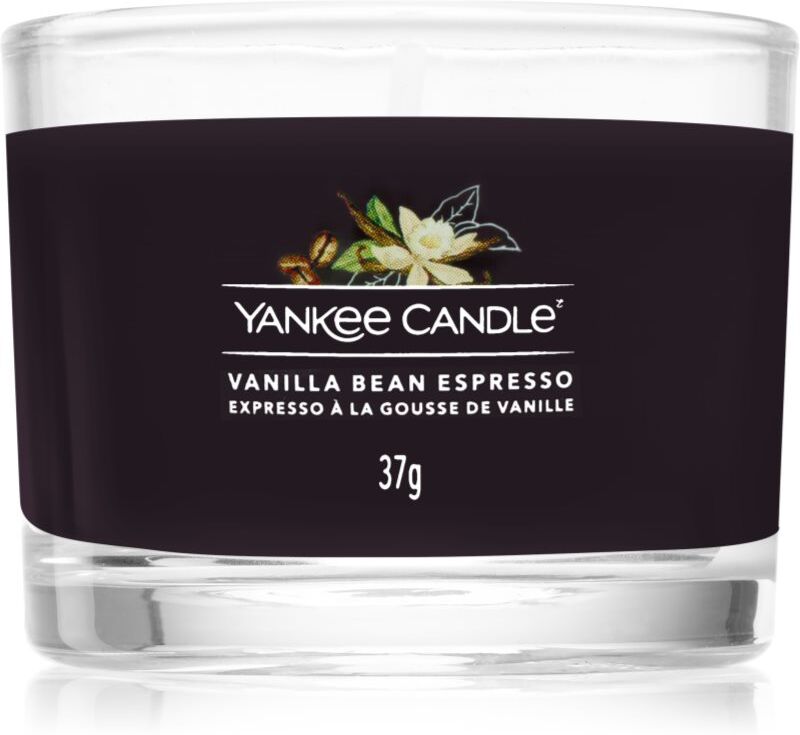
Yankee Candle Vanilla Bean Espresso bougie votive 37 gYankee Candle Vanilla Bean Espresso, 37 g, Bougies votives Parfum d'ambiance, S’il y a bien un endroit où l’on devrait se sentir bien et détendu, c’est chez soi. La bougie votive Yankee Candle Vanilla Bean Espresso emplit l’espace d’un parfum subtil et contribue à créer une atmosphère propice à la concentration, mais aussi à la détente, nécessaire après une journée difficile. Avec sa flamme douce et vacillante, elle apporte également à votre intérieur une touche chaleureuse et cosy qui transforme chaque instant ordinaire en un moment de bien-être.3,80 €*Shipping: 3,45 €Secure redirect to the provider
-
What is the use of the present subjunctive and the past subjunctive?
The present subjunctive is used to express desires, doubts, wishes, or hypothetical situations in the present or future. It is often used after certain verbs and conjunctions that indicate uncertainty or subjectivity. The past subjunctive, on the other hand, is used to express desires, doubts, wishes, or hypothetical situations in the past. It is often used in the same way as the present subjunctive, but in reference to past events or situations. Both subjunctive forms are used to convey uncertainty or subjectivity in a sentence. **
-
Are the subjunctive I and the subjunctive II present in all tenses?
No, the subjunctive I and subjunctive II are not present in all tenses. The subjunctive I is only present in the present tense, while the subjunctive II is present in the past tense. The subjunctive I is used to express wishes, suggestions, or hypothetical situations in the present, while the subjunctive II is used to express wishes, suggestions, or hypothetical situations in the past. Each tense has its own specific form of the subjunctive mood. **
-
'It is strange that + subjunctive'
It is strange that she should be so calm in such a chaotic situation. **
-
Would we use the subjunctive?
We would use the subjunctive mood in English to express wishes, hypothetical situations, recommendations, or demands. It is used to convey uncertainty, doubt, or desire. The subjunctive is typically used after certain verbs, expressions, or conjunctions that indicate these types of situations. **
* All prices are inclusive of VAT and, if applicable, plus shipping costs. The offer information is based on the details provided by the respective shop and is updated through automated processes. Real-time updates do not occur, so deviations can occur in individual cases. ** Note: Parts of this content were created by AI.